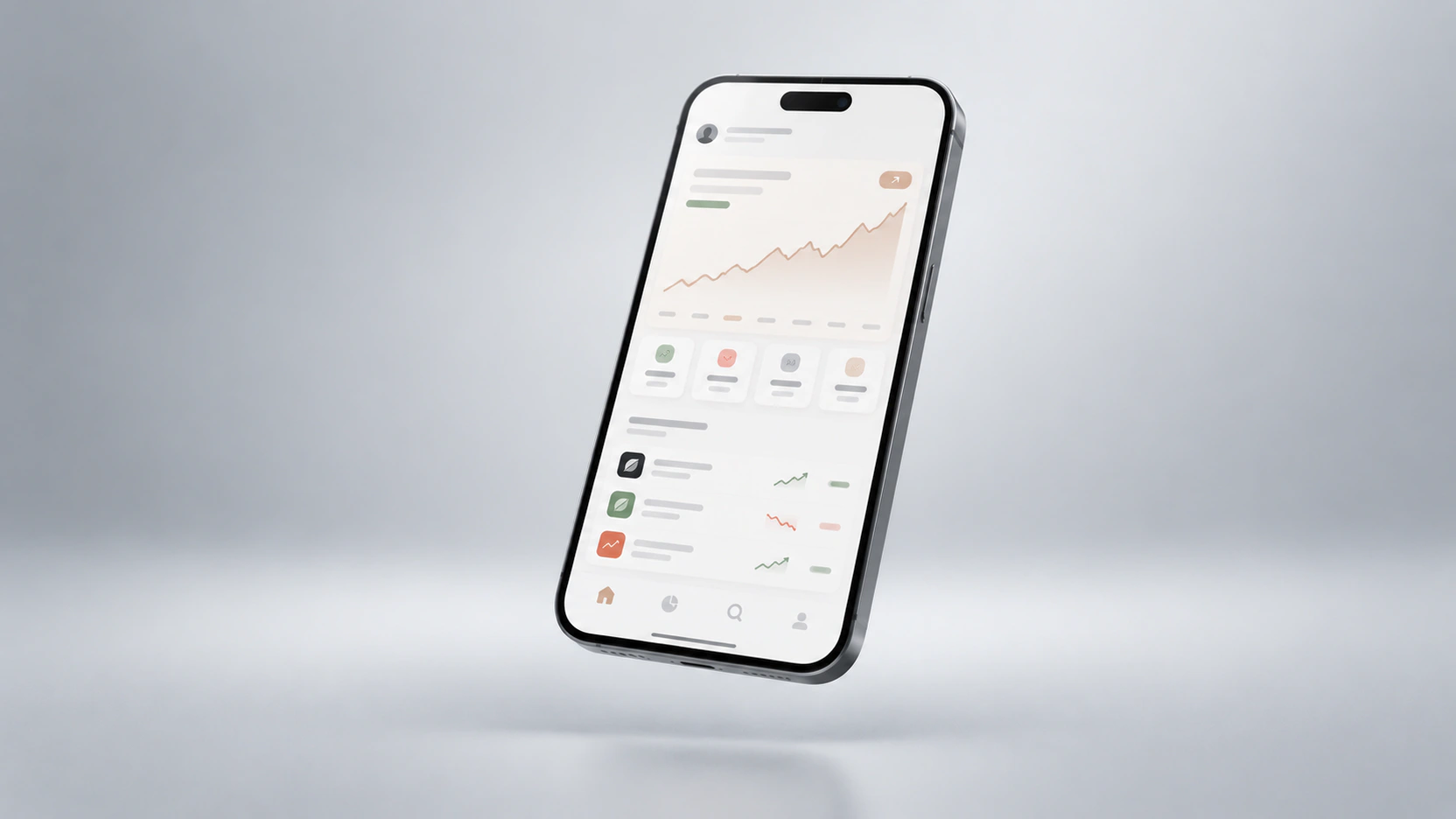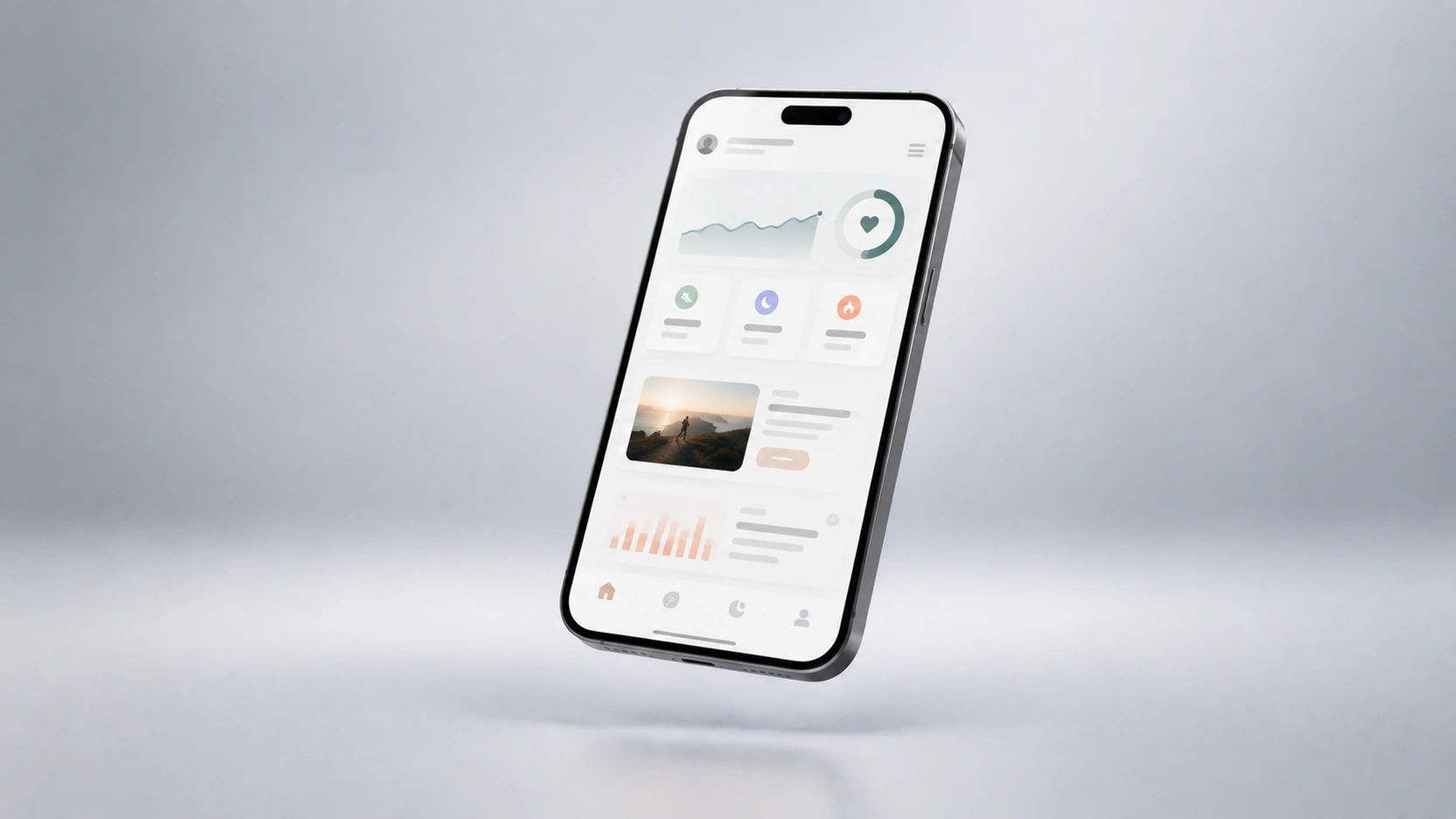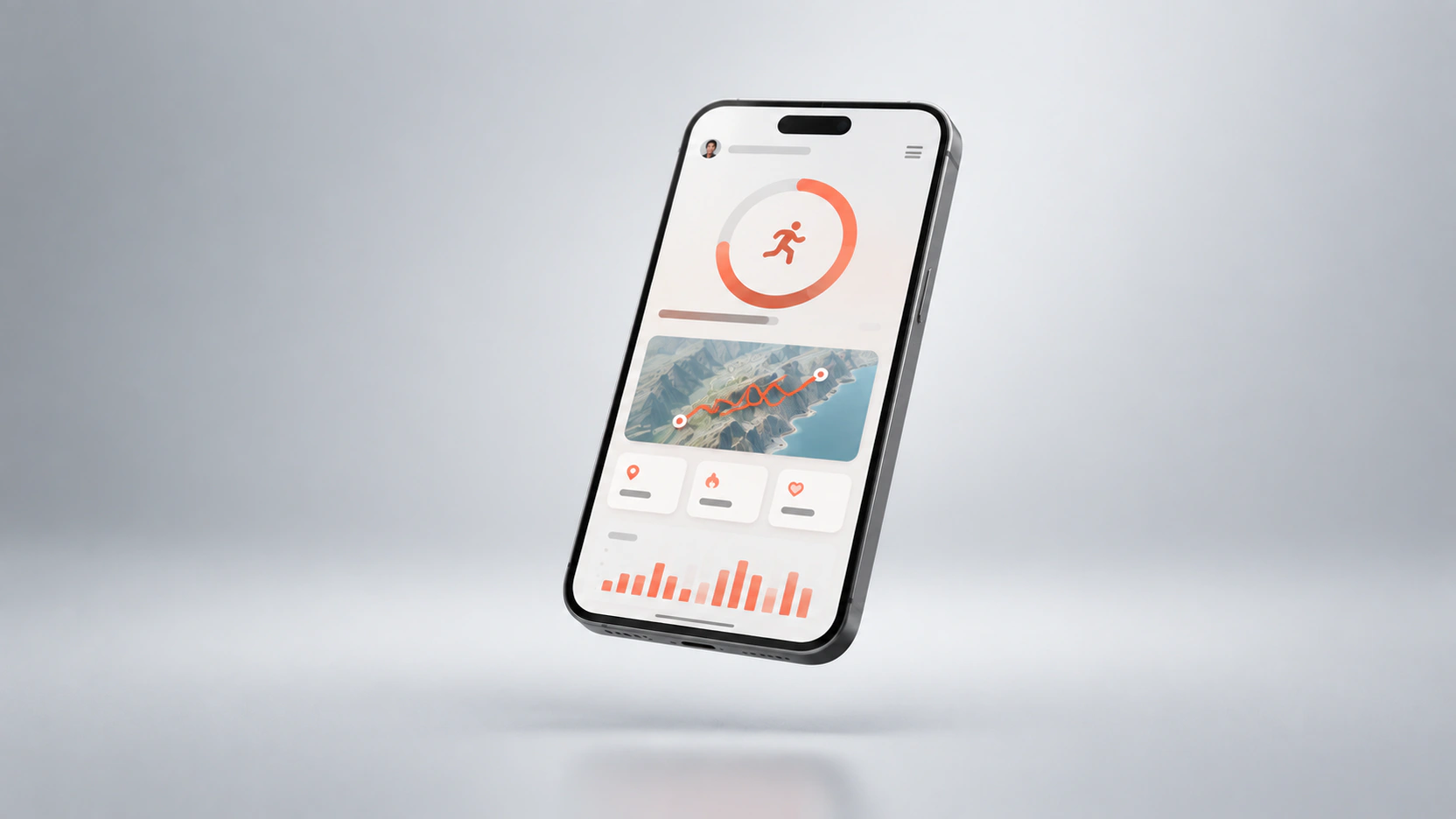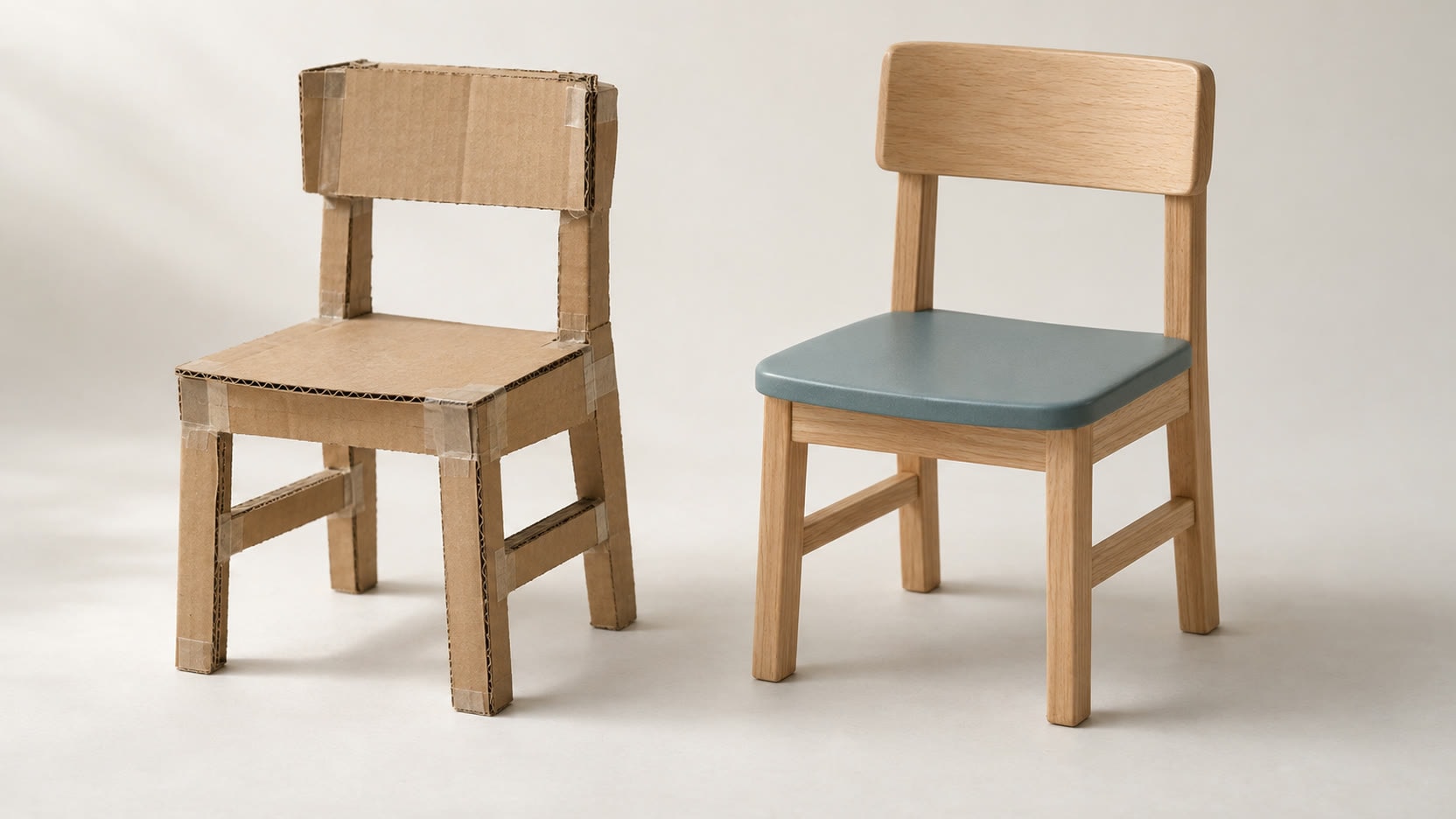
A prototype shows what a product would look like, so you can check that people understand it and want it. An MVP is a small but real product that people use by themselves and pay for. If you still need to test the idea, build a prototype. If the idea is tested and you need real users, build an MVP.
Founders often say "prototype" and "MVP" for the same thing. Then they ask for a price, and the answers are very far apart. The reason is simple: a prototype and an MVP are two different things, made for two different jobs. This article explains the difference in plain words, shows where a prototype built with an AI tool sits, and gives you a simple way to decide which one you need now.
What is a prototype?
A prototype is a model of your product. It shows the screens and the main steps, so people can see the idea and react to it. It can be a clickable design, or a first version built quickly with an AI tool or a no-code tool (a tool that builds software without writing code).
A prototype answers one question: do people understand this, and do they want it?
It does not need to be safe, fast or complete. It often runs on sample data. You usually sit next to the person who tries it, or you show it yourself in a meeting.
What is an MVP?
An MVP (minimum viable product) is the smallest version of your product that real people can use, and that you can learn from. It is small, but it is real. People sign up alone, their data is stored, and often they pay.
An MVP answers a different question: will people use this, and will they pay for it?
Because real people rely on it, an MVP needs the parts a prototype can skip: secure accounts, a data model that can grow, payments that work from start to finish, and error monitoring.
Prototype vs MVP: the differences, point by point
- The question. A prototype asks "do people understand and want this?". An MVP asks "will people use and pay for this?".
- Who uses it. A prototype is for you, a few testers, and maybe investors. An MVP is for real users, who use it alone, with their own data.
- Time. A prototype is fast: days, not months. A focused web MVP built by a studio takes about six weeks.
- Cost. AI builders cost near zero to start, and no-code you build yourself costs €0 to €2,000 at market rates. A production MVP costs €3,000 to €15,000 with a freelancer and €15,000 to €50,000 and up with a studio or agency. Our guide to what an MVP costs explains these ranges.
- What is inside. A prototype has screens and a main path, often with sample data. An MVP has the same main path, plus real accounts, real data and real payments.
- What happens after. A prototype has done its job when you have your answer. Then it becomes the brief for the real product. An MVP stays: you improve it and grow it as users tell you what they need.
A prototype is something you show. An MVP is something people use when you are not in the room.
Where does an AI-built prototype sit?
Tools like Lovable and Bolt changed the picture. You describe your idea, and you get something that runs in a browser, sometimes with a login and a database. It looks like a product. So is it an MVP?
In most cases, it is still a prototype. A very good one, but a prototype. It proves the idea and it is perfect for a demo. What it usually lacks is everything users cannot see: each user's data kept separate, payments that handle failed charges, speed on real phones, and a way to know when something breaks.
That does not make it worthless. An AI-built prototype is the clearest brief you can give to anyone who builds the real version. We keep what works and build the production version around it. We explain what that step involves in from AI prototype to real product.
Which one do you need?
Look at where you are today, not at where you want to be in a year.
- You are not sure people understand the idea. Build a prototype. Show it to ten people from your target group and listen.
- You need to show something to investors or first customers. A prototype is enough to get a first yes.
- People already want it. They joined a waiting list, they ask when it is ready, or they already pay you to do the job by hand. Build an MVP.
- You need to know if people will pay. Only a real product with real payments can tell you. Build an MVP.
- You have an AI prototype that people like. The idea is tested. The next step is to turn it into a product people can rely on.
One simple rule: if strangers will use it alone and trust it with their data or their money, you need an MVP.
Three common mistakes
- Launching a prototype as a product. It works in the demo, then real users arrive and things break. Trust is hard to win back.
- Building an MVP before any test. You spend weeks and a real budget on an idea nobody has seen. A prototype would have given you the answer much sooner.
- Improving the prototype for ever. At some point the prototype has answered its question. More changes to it will not tell you if people pay.
Do you need both?
Often yes, one after the other. The prototype tells you what to build. The MVP tells you if it is a business.
In a good MVP project, the two are linked. In our process, the design step produces a clickable version of the key screens before any code is written. You can test it with a few people, and change a screen in minutes. Then we build the real product from it. You can see how that fits in the timeline in an MVP in six weeks, week by week.
The bottom line
A prototype and an MVP are not a cheap and an expensive version of the same thing. They answer two different questions. First ask "do people want this?", with the fastest prototype you can make. Then ask "will they use it and pay?", with a small product built properly. If you already have your first answer and want the second, see how we build MVPs and tell us where you are.