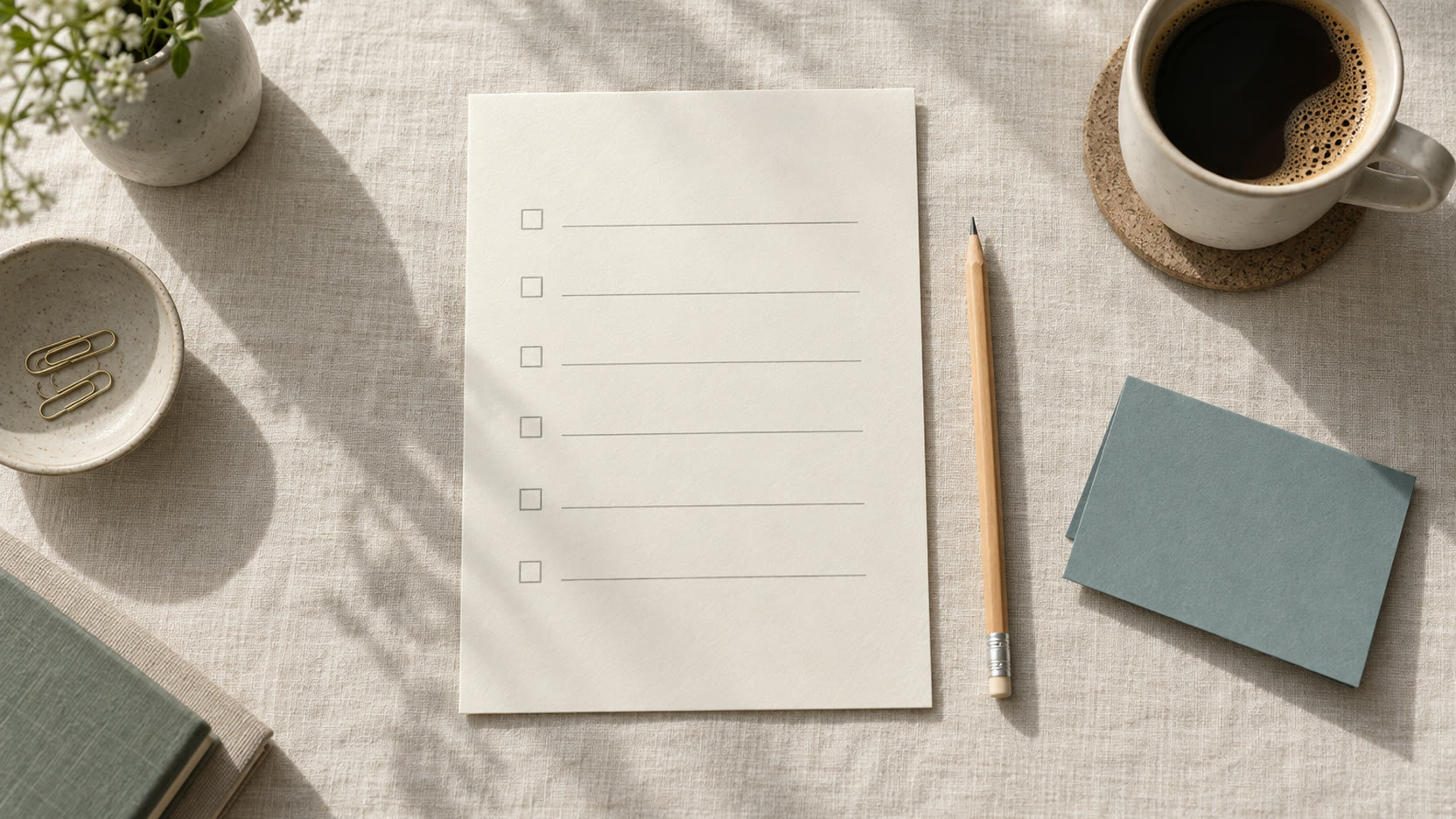
A good MVP brief fits on one page. It says who the user is, what problem you solve, the main path through the product, the must-have features, what exists already, your budget range, your deadline and how you will measure success. You do not need a full specification or wireframes. A good studio helps you with those.
Many founders wait weeks before they contact a studio, because they think their idea is not "ready". Others send a forty-page document and get answers that are impossible to compare. Both lose time. A short, honest brief gets you better answers, faster. This article shows what to put in it, gives you an outline you can copy, and explains how to tell a good reply from a bad one.
What is a brief for?
A brief is a short text that explains your project to the people who may build it. It has one job: to give a studio enough to understand your idea, ask the right questions, and tell you honestly if they can help.
It is not a contract, and it is not a plan of every screen. Think of it as the start of a conversation. If the brief is clear, the first call is about your product. If it is not, the first call is spent finding out what you want.
What should a one-page brief contain?
- The user. Who is the first version for? Be exact: one type of person, in one situation.
- The problem. What costs this person time or money today, and how do they deal with it now?
- The main path. The few steps the user takes to get the result. Four or five lines are enough.
- The must-haves. The short list of things the first version cannot work without. If you are not sure how to choose, read what to put in an MVP first.
- What exists already. A prototype, designs, a logo and colours, a domain, a waiting list, first customers. Say it even if it is messy.
- Your budget range. A range, not an exact number. It lets the studio tell you what fits inside it, and what does not.
- Your deadline. A date, and the reason behind it: an event, a season, a funding round.
- How you will measure success. One or two numbers you will look at after launch, for example how many people sign up and finish the main path, or how many pay.
Many founders do not want to share a budget, because they fear the price will rise to match it. In practice, the opposite problem is more common: without a range, a studio has to guess, and you get a proposal for the wrong size of project. If you do not know what is realistic, our guide to what an MVP costs gives the market ranges for 2026.
A brief outline you can copy
Copy these lines into an email or a document, and answer each one in one to three sentences.
- The product in one sentence: what it does, and for whom.
- The user: who the first version is for.
- The problem: what is hard for them today, and what they do about it now.
- The main path: step 1, step 2, step 3, result.
- Must-haves: three to seven things the first version needs.
- Not now: ideas that can wait for version two.
- What exists: prototype, designs, brand, domain, first users.
- Budget range: from X to Y.
- Deadline: the date, and why.
- Success: the one or two numbers you will watch after launch.
- About you: who decides, and how much time you have each week for feedback.
What do you not need to write?
- A full specification. This is a long document that describes every feature in detail. Writing one takes weeks, and much of it changes as soon as someone asks good questions.
- Wireframes. These are simple drawings of each screen. Design is part of the work a studio does with you. A rough sketch on paper is welcome, but it is not required.
- Technical choices. You do not need to choose the programming language or the database. Describe what the product must do, not how to build it.
- A complete list of features. A short list of must-haves is more useful than a long list of wishes.
If you have a prototype built with an AI tool or a no-code tool, send the link. Even a messy prototype is a very clear brief.
A brief does not need to be complete. It needs to be clear about who the product is for, and honest about what you do not know yet.
What questions will a good studio ask you?
A good reply usually starts with questions, not with a price. Expect some of these:
- About your users. Who are the first ten, and how will you reach them?
- About today. What do people use now to solve this problem?
- About priorities. If only one thing works on day one, which one must it be? What can wait?
- About money. Will users pay from the first day? How: one payment or a subscription?
- About platform. Do you need a mobile app at launch, or can you start on the web?
- About you. Who makes the decisions, and how quickly can you give feedback?
These questions are a good sign. They show the studio is trying to make your project smaller and clearer before it gives you a number.
What are the warning signs in a reply?
- A price with no questions. Nobody can price a product well from one page without asking anything.
- A yes to everything. If nothing on your list is questioned or moved to later, nobody is protecting your budget.
- An hourly rate and no total. You carry all the risk if the work takes longer.
- Vague answers about ownership. It should be clear that the code, the accounts and the data are yours.
- Nothing about after launch. Real users find real problems. Ask who fixes and improves the product then.
- No live product to show. Ask for products they built that are still online today.
- You cannot tell who will do the work. The people you speak to should be the people who build, or you should meet them.
These signs apply to any builder, not only to studios. We compare the options in studio, freelancer or agency.
What happens after you send the brief?
Usually a first call. You go through the brief together, and the studio asks the questions above. After that call, you should get a clear proposal: what will be built, what waits, the price and the timeline.
This is how it works with us. After a first call, we quote a fixed price for the scope, and we agree the timeline up front. A focused web MVP goes live in about six weeks. The first step of the project is a discovery workshop, where we lock the smallest scope that proves the idea. So your brief does not need to be perfect. It needs to be enough to start.
The bottom line
One page is enough: the user, the problem, the main path, the must-haves, what exists, a budget range, a deadline and how you will measure success. Send it to two or three builders and compare how they answer, not only what they charge. If you want to send it to us, read how our MVP sprint works and get in touch. A few lines are a fine start.